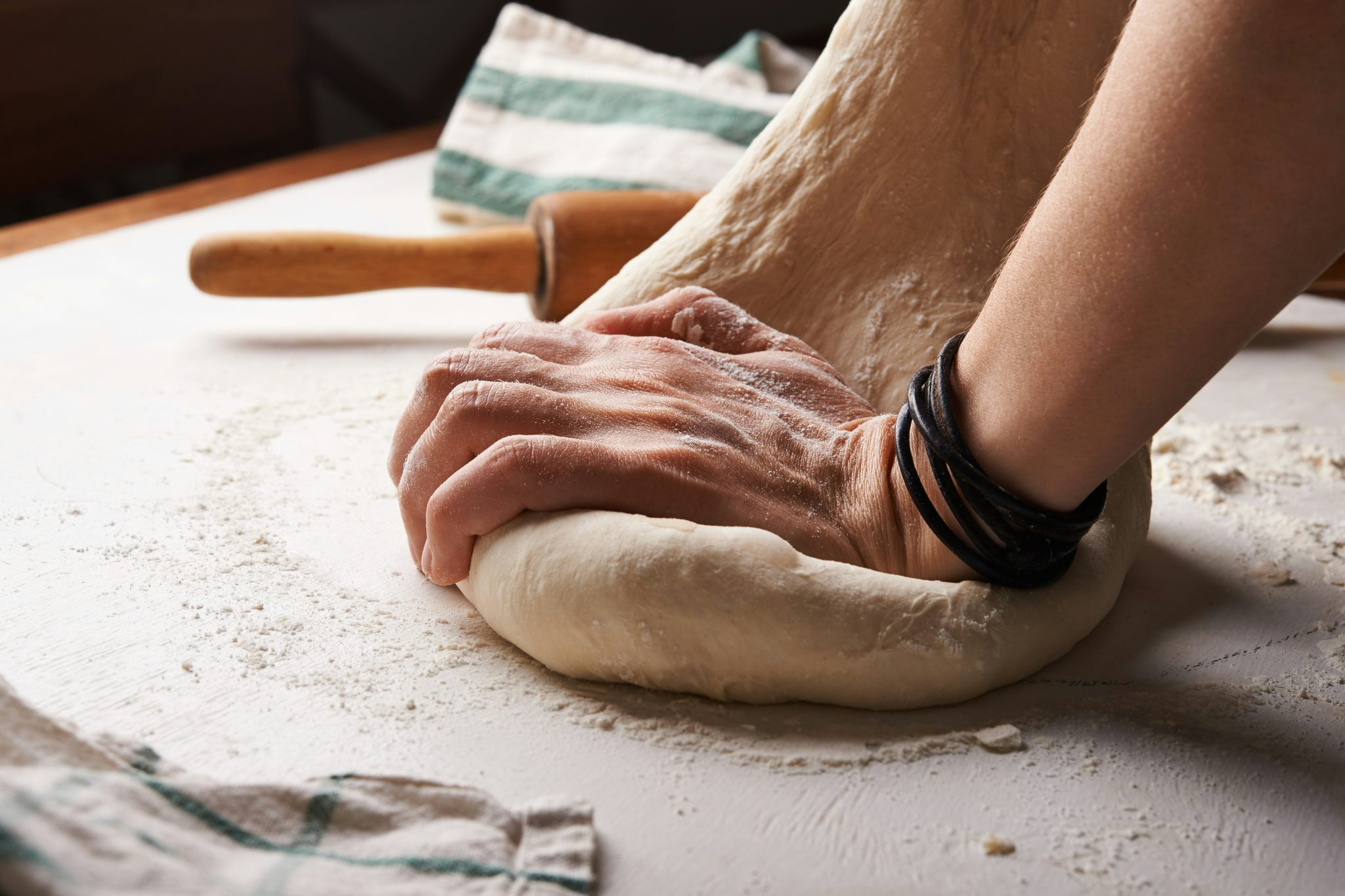
Sometimes love is not spoken—it is kneaded into bread, offered through tired hands and placed warmly before us.
Tender Love in the Ordinary: A Mother's Quiet Gift
Sometimes tender love is spoken aloud. And sometimes, it is kneaded into bread, whispered in prayer, or taken from an almost-empty purse and placed into the hand of a child.
I do not remember exactly how old I was when I asked my mother for lunch money.
I only remember that I wanted a quarter.
Twenty-five cents could buy a school lunch in those days. My mother had already packed food for me from home, so I was not hungry. I simply wanted to stand in the lunch line and buy my meal like the other children. I wanted, for that small moment, to feel no different from anyone else.
I was old enough to know that money was scarce in our home. I understood that asking for a quarter was not nothing. But I did not yet understand the depth of my mother’s sacrifice, or what she might have had to set aside so that I could have it.
At the time, I saw only the coin she placed in my hand.
I closed my fingers around the hard metal coin and with excitement went on with my day. I did not ask what she might have to go without. I did not question whether that coin had been set aside for milk, bread, or something she needed herself.
Children should not have to carry those worries, she carried them for us.
Looking back through the compassionate eyes of age, I understand what I could not see then.
That quarter was the tender love of my mother.
It was love offered quietly, without ceremony. It was a mother deciding that her child’s need would come before her own. It was a small silver coin carrying a sacrifice far greater than its value.
Love rested in my palm that day, though I did not recognize it yet.
Learning to Recognize Tender Love
As children, we often look for love in the ways we most need to receive it.
We long for gentle words, comforting arms and someone who will say, “I see you. I understand you. You are safe with me.”
When love does not arrive in the expected ways, we may believe it was absent.
Growing older has taught me that tender love can reveal itself in many different languages.
Some people express love through words.
Others express it through serving and through work.
Some sit beside us in silence.
Some pray for us when they do not know what to do or say.
Some prepare food, mend clothes, count coins and quietly give away the little they may have.
My mother’s love was often expressed through her hands.
Her hands gathered food to nourish our growing bodies.
Her hands prepared meals from inexpensive ingredients.
Her hands kneaded dough before the rest of the household even opened an eye.
At the time, I did not always recognize those ordinary tasks as love. Now I can see that her love had been present in many places I had overlooked.

Tender Love Placed Upon the Table
When money was scarce, my mother bought foods that were inexpensive but nourishing.
There was the dreaded liver.
There was the cow’s tongue.
There were the dandelion greens gathered from the earth.
To us children, they were weeds.
To my mother, they were food that provided vitamins and minerals for our growing bodies.
She looked at what others might have discarded and saw nourishment. She looked at the little money available and tried to make it stretch far enough to feed us.
As a child, I did not look at a plate of liver and onions and see tender love. I saw liver. Yuck.
My mother saw iron, nutrition and another meal placed before her children. There may not have been abundance, but there was such loving effort.
So sometimes her tender loved arrived at our table wearing an unappealing disguise.
She also prayed over us continually. She prayed for our health, our bodies and our futures. She prayed over our childhood and the thin seasons when there was not enough of anything except worry and faith.
She could not always give us everything we needed, but she gave us all she could.
Her prayers were another form of her tender love-words spoken to God when she had no power to change the circumstances herself.
When Tender Love Tried to Delight Us

My mother did not only try to nourish us. Sometimes she tried to delight us. Once she decided to make homemade root beer. We loved root beer floats-the sweet, dark fizz poured over vanilla ice cream, the foam rising in the glass like a celebration.
She prepared the root beer formula, probably with one of thise deceptively simple formulas printed on a small bottle of extract: nearly 5 gallons of lukewarm water, four pounds of sugar, and a half a teaspoon of yeast. She stirred everything together, poured the dark liquid into a huge glass bottle and sealed it tightly. We watched and waited for the yeast to work its magic and turn all that sweetness into a fizzy delight. But the yeast was alive, and it did not understand my mother’s desire. It just kept feeding on the sugar, building pressure inside the jar, bubbling and pushing against the glass until it could hold no more.
Then we heard the explosion. A sharp blast on the porch sent us all rushing to discover what on earth had happened.
There was glass and sticky-sweet liquid everywhere. The experiment intended to bring us delight had literally blown itself apart.
I do not remember her ever trying to make root bear again. Yet the memory still carries warmth. Tender love does not always succeed perfectly. Sometimes it leaves a mess. Sometimes the thing intended to create happiness shatters before anyone can enjoy it.
But the love remains in the trying.
My mother wanted to give us more than basic nourishment. She had wanted to offer sweetness, surprise and joy.
The root beer may have failed. Her tender love did not.
Tender Love Rising in the Kitchen
The root beer experiment may have ended with more bang than fizz, but the kitchen continued to hold evidence of my mother’s care. The most loved expression that lingers in memory is her bread. She may not have always spoken of her love easily, but she kneaded it into the dough and left it beneath a cloth to rise. It filled the house with the warm yeasty fragrance of fresh loaves and cinnamon rolls spiralled with butter, sugar, and spice. In those ordinary offerings, love became something we could see, smell, touch and taste-that warmth from the oven that she crafted with her own hands.
Breadmaking was not a quick task fitted between other duties. It was an all-day devotion that often began before the rest of the house was awake.
In the quiet of the early morning, she gathered the simplest ingredients:
Flour.
Yeast.
Warm water.
Salt.
Sugar.
A little butter.
Nothing extravagant.
Nothing expensive.
Yet beneath her hands, those ordinary ingredients became warmth, comfort and home.
She mixed the dough and waited for it to rise. Then she pressed it down and began to knead. She folded it, turned it and worked it beneath the strength of her palms until the dough became smooth and elastic. Then she waited again.
There was so much waiting in breadmaking.
As a child, I noticed only the finished bread. Now I notice the patience. My mother gave hours of her day to something we would tear apart and eat within minutes.
Tender love was hidden in every stage—the mixing, kneading, shaping and waiting.
She formed the dough into little balls and tucked them into buttered pans, each one resting beside the next like something precious.
Then the fragrance began moving through the house. There are few aromas as comforting as homemade bread baking in the oven. Before the rolls ever appeared, the smell found us. Warm tendrils of yeast and butter drifted through every room, drawing us towards the kitchen. For that moment, all was well.
As soon as the rolls came from the oven, we reached for them while they were still too hot to hold. We juggled them from one hand to the other until we could finally pull them apart.
Steam escaped from their soft centres. Then came the butter—a generous piece pressed into the middle, melting into every warm fold.
The first bite held softness and comfort.
It was my mother’s tender love, hot from the oven and placed directly into our hands.
The Cost Hidden Inside Tender Love
I have never learned to make bread the way my mother did. The process seemed too long and demanding. There was too much kneading. Too much rising. To much waiting. Now I can understand that the waiting was part of the gift.
Tender love is not found only in what is given. It is also found in what the giving costs. The time surrendered. The effort made. The need postponed. The comfort set aside.
This is what I did not understand about the quarter. I saw twenty-five cents. I did not see its cost. We often measure gifts by their monetary value, but love uses a different scale.
A large gift given from abundance may require very little. A small gift given from scarcity may contain almost everything. The quarter may have looked insignificant, but my mother gave it from the little she had.
It said:
I may not have much, but I will share it with you.
Your hunger matters to me.
Your need will come before mine.
Take this.
Go and eat.
You are loved.
Tender Love Made Sweet
When my mother wanted to transform ordinary bread into a celebration, she made cinnamon rolls.
She took the pale bread dough and rolled it across the floured table and sprinkled cinnamon and sugar generously over it. Then she carefully rolled the dough into a long spiral, tucking all the sweetness inside.
She sliced it into rounds and nestled them together into metal pans. There they rested and rose, swelling gently into one another like soft pillows.
And when they baked, oh my goodness-the fragrance changed the entire house. The scent of bread mingled with cinnamon-that warm dusky sweetness that seemed to enter not only the room, but the entire memory to stay.
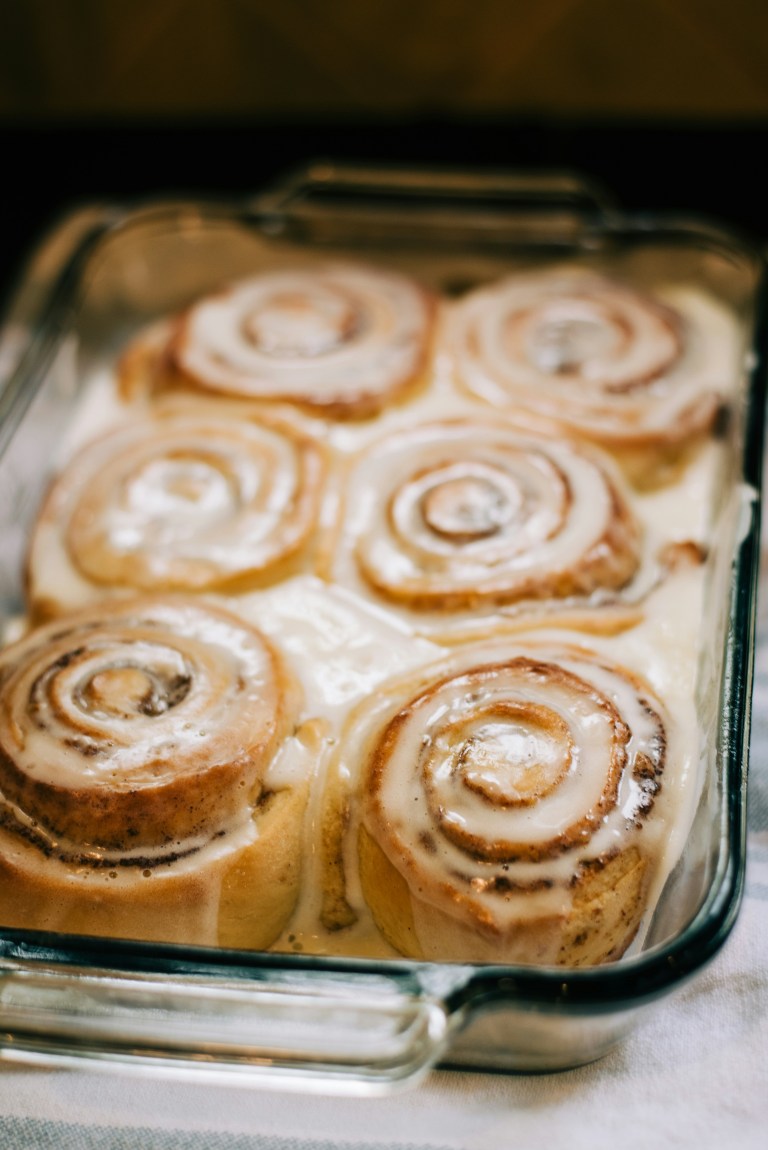
When the rolls were still hot, she covered them with the sweet powdered icing. It melted into every crack and spiral, sliding over the golden tops into the cinnamon beneath.
Even after we became adults, we still craved that sweet love and asked her to make them-again and again.
At Christmas, we did not want want expensive gifts. We wanted something that only she could make. We wanted her bread. We wanted her cinnamon rolls. We wanted to taste home and that sweet tender love.
By then, perhaps, we had begun to recognize the love in the language she spoke most fluently.
That Tender Love We Carry Forward
I did not inherit my mother’s gift for breadmaking, but I did carry forward her recipe of homemade noodles.
They began with the same humble ingredients: Flour, eggs and salt. There was no machine and no expensive equipment. Only hands, flour and love.
I love the feeling of the dough gathering beneath my fingers. I mix, knead it and roll it across the counter. Not too thick. Not too thin. Gently coaxing it into the right shape.
Rolling the dough into a long spiral and slicing it into rounds. Each coil of dough, dusted with powdery white flour, feels soft and cool beneath my fingers. I find the loose end and slowly let it unwind. The pale golden dough slips free into long, supple ribbons, sending tiny puffs of flour difting through the air and settling across everything-me and the kitchen.
Then the faint, dry whisper as the noodles brush against each other, followed by the soft faint sigh as they fall. I lay them gently, side by side. Where they rest in the warmth of the kitchen until their tender softness slowly becomes firm.
Nearby, a roast has been cooking slowly. It’s deep, savory fragrance of beef and broth filling the kitchen. When the meat have grown tender enough to yield beneath a fork and fall into soft pieces, the dried noodles are gently slipped into the rich juices. There, they soften and swell , absorbing the warmth and flavor of the roast.
It has become home in a bowl. Perhaps this is how tender love can travel through generations. We do not carry everything.
Sometimes we carry only one recipe.
One prayer.
One familiar phrase.
One story.
One way of caring for another.
One quarter placed in a small hand.
We receive what someone was able to give, and then we carry it forward in our own language.
"Dear children, let us not love with words or speech but in actions and in truth."
I John 3:18 (NIV)
Holding More Than One Truth
Recognising my mother’s tender love does not mean pretending everything in the past was beautiful. Pain is still pain. Absence is still absence. There were needs that should have been met and words that should have been spoken.
Understanding the love someone offers does not erase the love we needed but did not receive.
Healing has taught me that I can hold more than one truth. I can grieve the places where my mother could not reach me while honoring the ways she tried. I can acknowledge what was missing and remain grateful for what was given.
She may not always known how to speak the language a child’s heart needed most. But she spoke through flour. She spoke through her prayers. She spoke through meals placed upon the table. She spoke through cinnamon rolls and homemade noodles. She spoke through the quarter she could barely spare.
Tender love was there, even though I did not yet know how to recognize it.
Tender Love Hidden in Ordinary Things
We are often taught to look for love in grand gestures, romantic declarations and beautifully chosen words. But tender love is frequently hidden within the ordinary.
It is the husband who slips from the warmth of the bed on a cold winter morning and pads quietly into the kitchen to make it while we remain cocooned beneath the blankets.
It is the friend who takes time from her busy day to send a message because she knows the day will be difficult, her words arriving like a hand reaching across the distance to remind us that we do not have to carry it alone.
The husband who stands beside the car in the sharp morning air, the faint smell of petrol rising as he fills the tank so we do not have to worry about it later.
The child whose name lights up our phone, calling simply to ask, “How are you doing there?”
The neighbor who appears at the door carrying a bowl of soup, still warm beneath the folded tea towel wrapped around it.
The grandmother who covers a plate and keeps it waiting for the late arrival, making certain there will be something warm to eat.
The mother who rises before dawn, while the house remains dark and silent, flour dusting her hands as she presses and folds the soft dough beneath her palms.
These gestures are easily overlooked because they are woven so quielty into the fabric of everyday life. Yet perhaps tender love lives most faithfully there-not in grand declarations or extraordinary moments, but in the small, repeated acts that gently say, I thought of you. You matter to me. You are not alone.
The Quarter I Finally Understand
When I picture that little girl asking for lunch money-not because she had nothing to eat, but because she wanted to buy her lunch like the other children-I wish I could kneel beside her and gently say: “Pay attention to the quarter.”
Not because she should feel quilty for asking. But because one day she would understand that she was holding something precious. A mother’s sacrifice. A mother’s recognition of that small childhood longing. A mother’s quiet decision to give money already stretched painfully thin.
I image the coin resting in my palm. Cool. Round. Shining. Only twenty-five cents. Yet it carried the entire language of tender love.
A mother’s love did not always arrive in beautiful sentences. It rose quietly beneath a clean cloth covering a bowl of bread dough. It stretched long ribbons of noodles drying across the table. It lingered in prayers spoken over her children and in the warm scent of cinnamon filling the house. It was even there in the jar of homemade root beer that exploded-evidence of how she kept trying to create comething special from the little we had.
And it was there in a quarter, taken from almost nothing and quietly placed into my waiting hand.
I did not understand the language then. But I can understand it now.
Mom, I see the quarter. I see the bread, the noodles and the cinnamon rolls. I see the prayers. I even see the shattered root beer jar differently now. I see how often your hands were saying what words could not.
I see your sacrifices.
I see your tenderness. I see your love.
It was never merely twenty-five cents.
It was a small, shining piece of your love, placed quietly in my hand.
Perhaps this is the invitation my mother’s life leaves with me: to keep our hearts open to all the ways we are loved.
Love may not arrive in a beautiful box tied with a golden ribbon. It may come as coffee carried to to us on a cold morning, petrol quietly placed in the car, soup warming our hands, a message sent on a difficult day, bread rising beneath a cloth-or a small silver quarter pressed into a child’s palm.
The gift is no less precious because it arrived without wrapping.
Tender love often wears the clothing of ordinary life. May we learn to recognize it, receive it with gratitude, and offer it just as tenderly to others.
With love for your heart, peace for your journey, and a little sprinkle of magic for the ordinary moments of your day,
Renée❣️